
Causal Inference
Causal inference is a central pillar of many scientific queries. Statistics plays a critical role in data-driven causal inference. Jerzy Neyman, the founding father of our department, proposed the potential outcomes framework that has been proven to be powerful for statistical causal inference. Neyman’s framework has been influential in biomedical and social sciences. David A. Freedman used Neyman’s framework to critically examine many existing approaches for causal inference, and his work has enlightened several generations of statisticians.
Current faculty work on causal inference problems motivated by a wide range of applications from neuroscience, genomics, epidemiology, clinical trials, political science, public policy, economics, education, law, etc. The faculty pioneer the principles, theories, and methods for causal inference building upon and extending the ideas from classical statistics (e.g., semiparametric theory, randomization inference, robust statistics), algorithms and principles from machine learning (e.g., random forest, stability principle), and optimization methods (e.g., evolutionary search and network optimization algorithms). The Casual Causal Group of faculty and students meets weekly to discuss research updates.
Researchers

statistics, machine learning, semiparametric models, asymptotic theory, hidden Markov models, applications to molecular biology
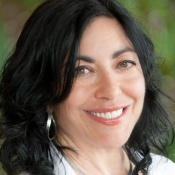
phase transitions, networks, graphs, graphons, algorithmic game theory, machine learning, applications in cancer immunotherapy, ethical decision-making, climate change, materials science
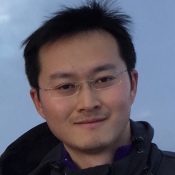
causal inference, econometrics, experimental design, measurement error, missing data, natural experiments, applications in biomedical and social sciences

high-dimensional statistical learning, statistical computing, computational biology and genomics, precision health and medicine

causal inference, machine learning, public policy, program evaluation, educational effectiveness

infectious diseases (specifically HIV), chronic disease epidemiology, environmental epidemiology, survival analysis, human rights statistics
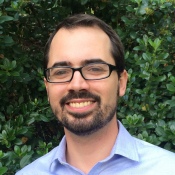
causal inference, public health, health services, biostatistics, discrete optimization

uncertainty quantification and inference, inverse problems, nonparametrics, risk assessment, election integrity, geophysics, astrophysics, cosmology, ecology, litigation, health

computational biology and genomics, censored data and survival analysis, semiparametric models, causal inference, multiple testing

veridical data science (PCS), trustworthy AI, interpretability, deep learning theory, tree-based methods, interdisciplinary research in medical AI, computational biology and genomics, neuroscience