
Probability
Since the 1950s, Berkeley Statistics faculty, including major 20th century figures such as David Blackwell, David Freedman, and Michel Loeve, have helped shape the foundations of probability theory. Building on its historic connections to statistics, probability in the 21st century has further extended its reach as a key bridge between theoretical and applied mathematics.
Current faculty research interests include the theory of algorithms, random graphs and trees, continuous and discrete statistical physics models, combinatorial mathematics, continuum limits of discrete random structures, random matrix theory, and random partial differential equations. The majority of this research is collaborative with researchers from other areas of the mathematical sciences, across a broad spectrum spanning theoretical to applied angles, with more details at the Berkeley Probability Group homepage.
Researchers

phase transitions, networks, graphs, graphons, algorithmic game theory, machine learning, applications in cancer immunotherapy, ethical decision-making, climate change, materials science

large random combinatorial structures and probabilistic combinatorics, superprocesses and other measure-valued processes, probability on algebraic structures, applications of stochastic processes to biodemography, mathematical finance, population genetics, phylogenetics…

models of percolation, phase transitions in statistical mechanics, mixing time of Markov chains, random walks on graphs
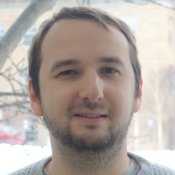
integrable probability, 2d statistical mechanics, random matrices, interacting particle systems, asymptotic representation theory, high-dimensional statistics
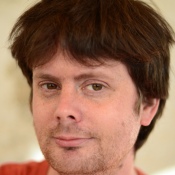
probability theory, statistical mechanics, partial differential equations
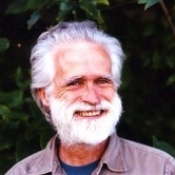
fragmentation, statistics, mathematics, Brownian motion, distribution theory, path transformations, stochastic processes, local time, excursions, random trees, random partitions, processes of coalescence

algorithms, applied probability, random walks, Markov chains, computational applications of randomness, Markov chain Monte Carlo, statistical physics, combinatorial optimization, nonlinear dynamical systems
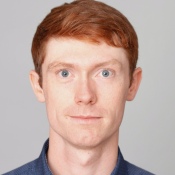
Bayesian inference, inverse problems, stochastic processes, biological systems, empirical game theory, nonequilibrium thermodynamics, optimization, and computational topology

mathematics, combinatorics, computational algebraic geometry


nonparametric estimation, hypothesis testing, applied probability, statistical learning theory, online learning